

In-person conferences aren’t cheap. Budgets, travel, venues, production and physical toll … by the time the doors open, you’ve invested serious time, money and energy.
That’s exactly why a conference can’t just be a neat speaker line-up and a seamless run sheet.
When the audience sits back and passively watches, you miss opportunities. Having so many (hopefully!) eager souls together in one room is a goldmine – you just have to know how to dig. This is your chance to inspire lasting change.
When people lean in, co-create and leave with momentum, value shows up in behaviour, culture and results. The difference is great conference facilitation: treating the day as a designed experience, not a string of keynotes.
Leaders already spend nearly 23 hours a week in meetings, so tolerance for passive chair time is near zero.
If your event feels like a long meeting with nicer lanyards, you’re in trouble. The fix isn’t hype; it’s craft: know why people are there, design for ownership and guide the energy so conversations (not just content) drive change.
In this article, we’ll unpack MC vs facilitator, show how design choices unlock engagement, share ways to handle curveballs in real time and explore how to measure outcomes beyond applause. You’ll hear from Phuel co-founder and experienced conference facilitator Dean Gale, whose simple rule anchors everything we do: ‘Nothing should be done to the audience; it should be done with them.’ (Phuel Conversations)
MC vs Facilitator: What Each Role Actually Offers at a Conference
A skilled MC keeps the program in motion. They welcome the crowd, introduce speakers, hit the time cues and cover logistics. It’s valuable and necessary. But it’s not necessarily the whole game.
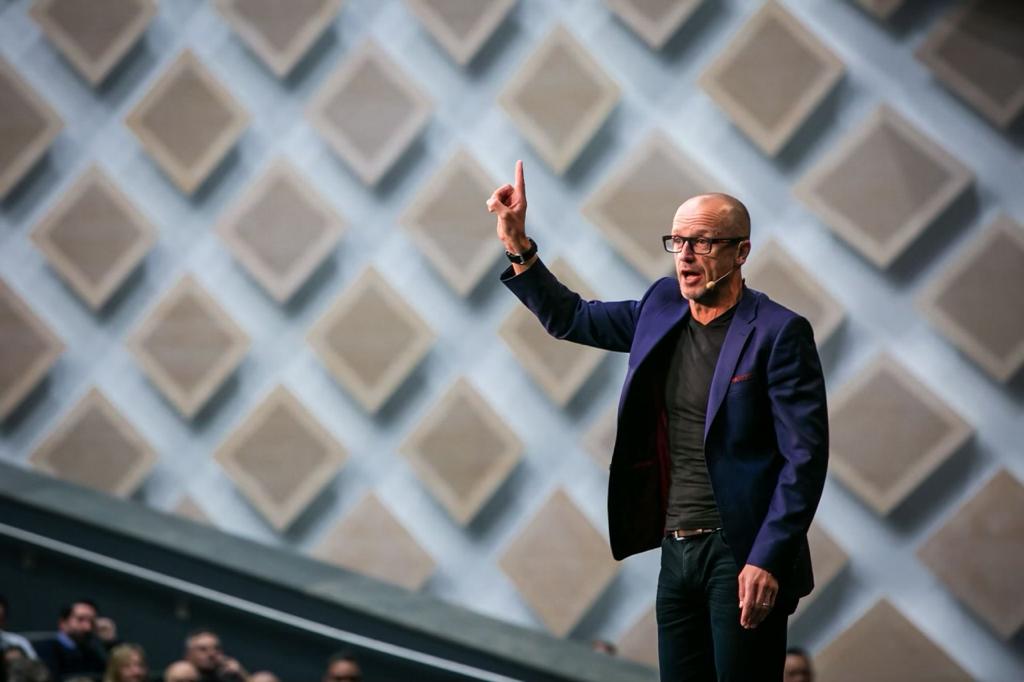
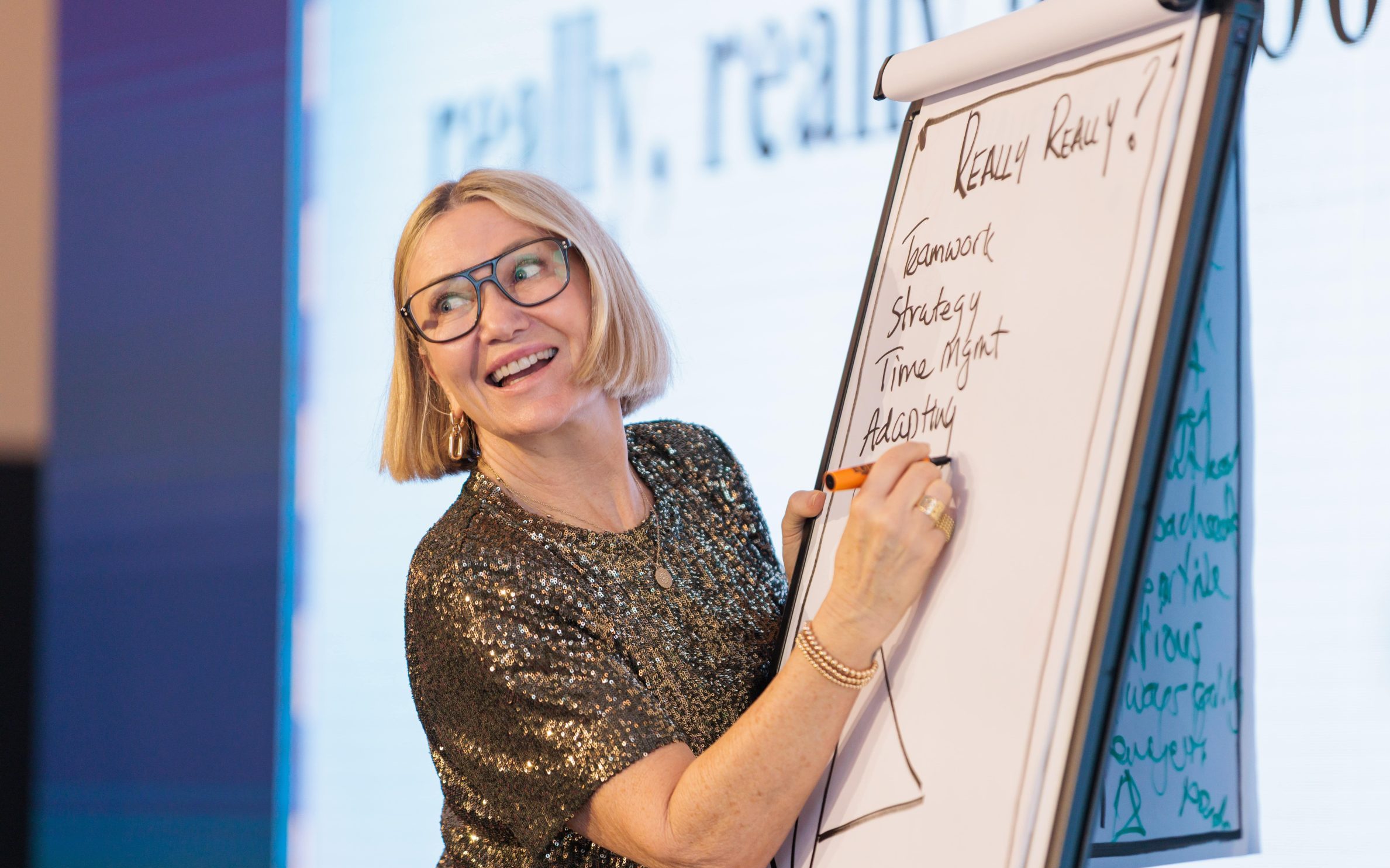
A facilitator is responsible for the experience in the room. They shape tone, build psychological permission, draw out insight from the crowd and keep linking everything back to purpose. A facilitator picks up the unsaid, lifts the room when energy drops and creates moments that invite honest voices and prompt action. They’re skilled at reading people, artful in creative pivoting and masters at truly engaging the entire audience.
Why does the difference matter? Because audiences don’t want to be talked at. They want to be involved. That shift, from consuming to contributing, is where ownership lives, and ownership is the bridge between a good show and lasting change at work.
Why Conference Facilitation Matters More Than You Think
Conferences are high-stakes moments. Face-to-face time is rarer in a hybrid world, and when you gather people in the same place, you’re spending not just money but attention, which is the scarcest resource in modern work. Leaders are already sitting through too many meetings, wasting precious time. When your conference recreates that dynamic at scale, people switch off.
A facilitated conference prioritises connection and conversation over one-way broadcasts. That matters because participation beats passive listening if you want ideas to stick and translate into action. People remember more, and act more, when they participate. In a large review of 225 studies, classes that used active learning outperformed lectures, and far fewer students failed. The same principle holds when you design conferences for involvement, not passive listening.
Finally, stakeholders aren’t asking for optics. They want strategy adoption, behaviour change and cultural alignment. Facilitation keeps you honest about outcomes, not just the vibe.
Designing Your Conference Agenda with Intent
Good event facilitation starts long before showtime. At Phuel, we begin with context before content. What’s the business problem? What outcome would make the investment worth it? What’s the audience carrying when they walk in – excitement, fatigue, scepticism? Without that understanding, even the best format can miss the moment.
Then comes the most important window of the day: the first two minutes. Dean’s playbook is simple and powerful: align with the room, get people connected and let them laugh.
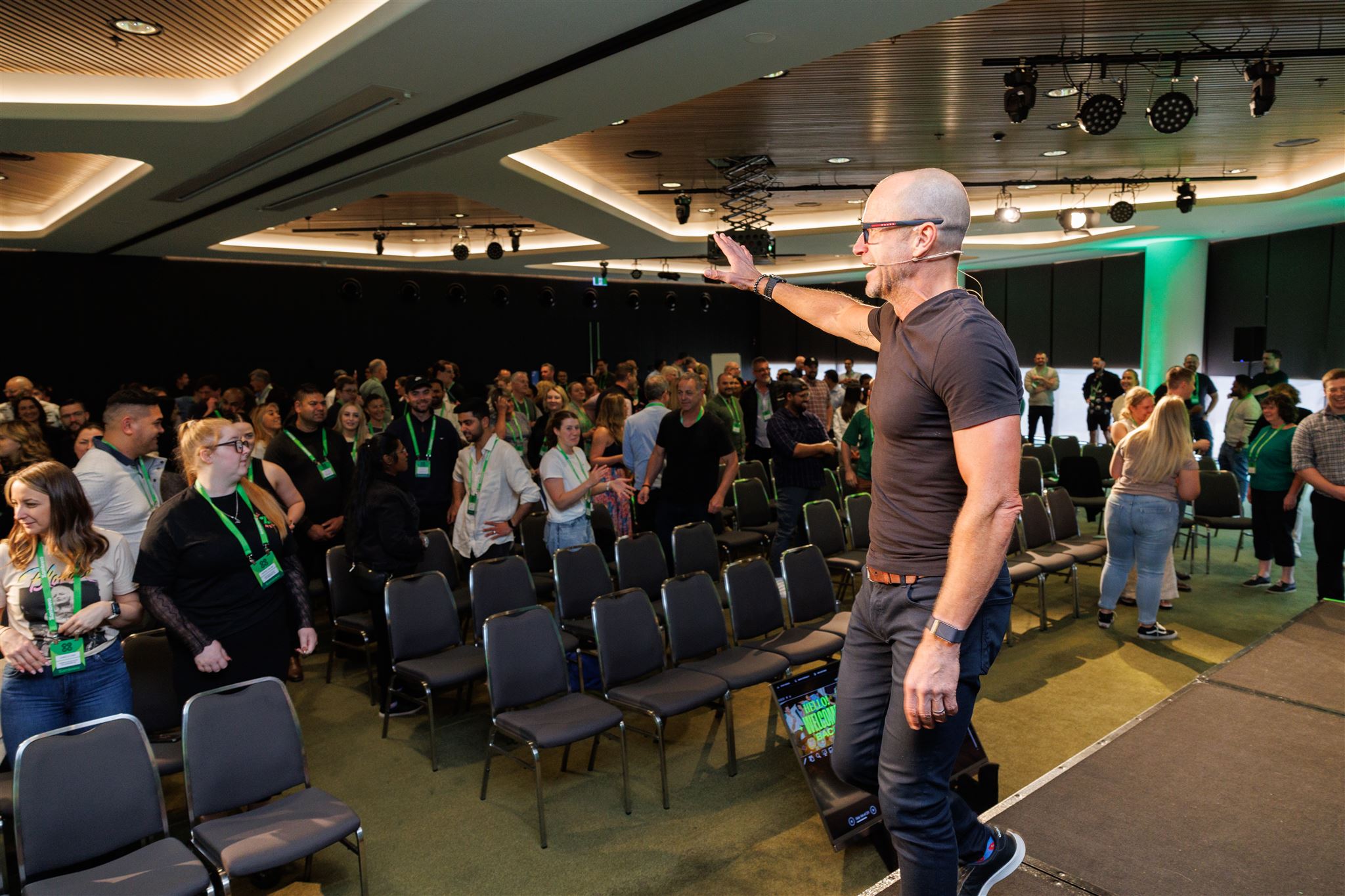
‘We’ve got to capture hearts and minds fast. I want them to physically experience connection in the first minutes – ideally with someone they don’t know – and then laugh. When people laugh, people light up.’ That opening creates psychological permission to participate, which sets a very different tone for everything that follows.
Tone-setting tools are deliberate. Warm humour unlocks attention without undercutting seriousness. A safe challenge invites candour without triggering defensiveness. And small acts of permission (turn to someone, compare notes, write the one question you’re wrestling with) tell the room that they own the day with you.
Techniques for Engaging Conference Audiences
Traditional Q&A often dies on stage. ‘Any questions?’ invites crickets. Facilitation replaces this with structure. Give the room a moment to think, ask a provocative prompt and let people test and refine their thoughts in pairs or at tables before bringing a few themes to the front. Suddenly, the CEO’s presentation isn’t just a speech. It’s a catalyst for a conversation the organisation needs to have.
Peer-to-peer connection is baked into the agenda, not left to chance. The best corporate conferences create designed moments of exchange: pair-shares after each keynote, short table conversations to pressure-test an idea and networking that has a purpose.
Then there’s the power of experiential activities. One of our signature simulations, Gold of the Desert Kings, drops teams into a vivid scenario where prioritisation, planning and collaboration determine whether you reach your goal, or get stranded in the sand. It’s fun, fast and revealing, and the parallels to the day job are unavoidable. Teams practise decision-making under pressure, trade off noisy ‘busyness’ for strategic action, and see the cost of poor assumptions in real time. That’s the kind of experience people remember and apply.
Why does this work? Because active participation changes outcomes. People who are invited to generate insight, not just consume content, remember more and do more with it. The evidence from large-scale studies is clear: engaging beats lecturing.
Handling Real-Time Challenges and Pivots During Events
Even with the best design, real rooms are messy, and people are often unpredictable. That’s where facilitator craft earns its keep.
In one professional services offsite of around 30 people, Dean remembers how he noticed visible resistance early on: crossed arms, short answers, that quiet hum of ‘I’d rather be somewhere else’. He pressed pause, named what he saw and levelled with the group: years of working with similar teams, and this behaviour was unusual and unhelpful. Then he gave people space to reflect on whether they wanted to truly participate. The energy shifted. Day 2 felt different because the group chose to be different. (Listen to Dean’s full story here.)
And here’s another real-world example: in a global post-COVID strategy session, a technology platform for a live simulation went down mid-flight – literally – given the scenario was about landing planes. Dean reframed the failure into the storyline: ‘Our planes have gone down. What now?’ And the group problem-solved live. The lesson landed harder because it wasn’t told; it was lived.
These aren’t planned party tricks. They’re proof that an experienced conference facilitator reads the room, protects the purpose and pivots without losing momentum.
Measuring Conference Outcomes – Beyond Satisfaction
A net promoter score has its place, but ‘Did you enjoy it?’ won’t tell you if anything meaningful changed. A facilitated conference measures what matters.
Start with connections built. Who met whom across silos, and how will those relationships continue? Track commitments made. What actions did people identify, and how will owners report back? Watch for post-event momentum. What changed in the 30–90 days after the event? Were decisions made faster, duplication removed, experiments started? A two-minute end-of-day reflection – ‘What did I learn, and what will I do differently?’ – turns insight into intent, and intent into follow-through.
There are design choices that help here, too. Sending materials at the last minute is a fast path to disengagement. Where possible, ensure pre-reads land at least 48 hours in advance so people arrive ready to contribute. It’s a simple move that improves the quality of discussion. And remember the bigger backdrop: across an eight-year, 607-organisation study, meetings ranked as a top dissatisfier. If your conference feels like more of the same, people will notice. If it feels like a real conversation with clear outcomes, they’ll notice that too.
Adapting with Feedback and Outcomes
Conferences breathe. The best ones don’t treat the agenda as a script. They treat it as a living plan that responds to the people in the room. That means listening in real time: reading the energy, noticing where conversation wants to go, and making small shifts that keep purpose front and centre. It also means building simple feedback loops into the day: quick check-ins after key moments, short reflections before close and a clear way for participants to name what they’ll do next. Those touchpoints are the engine of the conference. When you capture insight while it’s fresh and translate it into commitments before people walk out, you get real traction.
The same principle applies after the event. Follow the signals the group is giving you and adjust. If a topic sparked heated interest, open it up again with a short virtual session. If a team left with three priorities and is now stuck on the second, unblock it with a focused, 30-minute working huddle. Treat outcomes like a heartbeat you can hear and respond to – because the organisation will tell you, if you’re willing to listen.
From Big Day to Everyday Momentum
The impact of a great conference shouldn’t fade with the lanyards. The real win is when ideas show up in Tuesday’s weekly meeting and next month’s decisions. That takes intention. Anchor the work in a few visible behaviours people can practise immediately and help leaders model them early and often. Keep stories moving. Share what changed, who connected across silos, and which small experiments created outsized results. When teams see progress, they contribute to it; when they’re invited to own it, they accelerate it.
Think of this as a relay, not a finish line. The handover from ‘big day’ to ‘everyday’ is where momentum either leaks or multiplies, so design that baton pass with care: short nudges at 30/60/90 days, opportunities to reconnect peers who met in the room, and a simple rhythm for checking that commitments became actions. Do that consistently and the conference keeps shaping how people work together.
If you want a partner to help you keep that spark alive, Phuel is here to help. And if you’re ready to turn your next gathering into lasting momentum, get in touch and let’s explore what’s possible together.
Explore more blogs and listen to our Phuel Conversations podcast on your next drive to work.
