

Why does an experience you had in a training room fifteen years ago stick, when you can barely remember last month’s compliance module?
In this episode, Nathy Gaffney sits down with Andrew Thomas, CEO of Eagle’s Flight Asia Pacific, and Dean Gale, Phuel’s co-owner: two people with a combined 50-plus years in experiential learning. Andrew opens with the origin story of Eagle’s Flight founder Phil Goldart, a young HR leader who lost a room of factory workers three hours into a rollout, then came back the next day with something built from scratch rather than another lecture. That moment became the seed of simulations like Gold of the Desert Kings, still running decades later.
Dean’s own conversion story runs parallel: as a client organising a conference he’d sat through as a disgruntled delegate for six years, he fought to get Gold of the Desert Kings onto the agenda and watched 400 people transform in real time. That firsthand experience of watching it land is what turned him into what he calls a disciple, not just a buyer.
The conversation’s real backbone is the 70-20-10 model. Only 10% of learning comes from the workshop itself, 20% from the coaching and conversations that follow, and 70% from application back in the business. Andrew’s framing is sharp: if the 10% is dull and forgettable, there’s nothing to carry into the 20 or the 70. Experiential learning’s job isn’t to be the endpoint, it’s to be combustion: the spark that makes the rest of the model actually work.
Dean is refreshingly blunt about the limits of what a single session can do. He’s adamant he can’t change anyone’s behaviour in a few hours, only give people insight into how they behave under certain pressures. What they do with that insight, he argues, is squarely leadership’s job, not the facilitator’s.
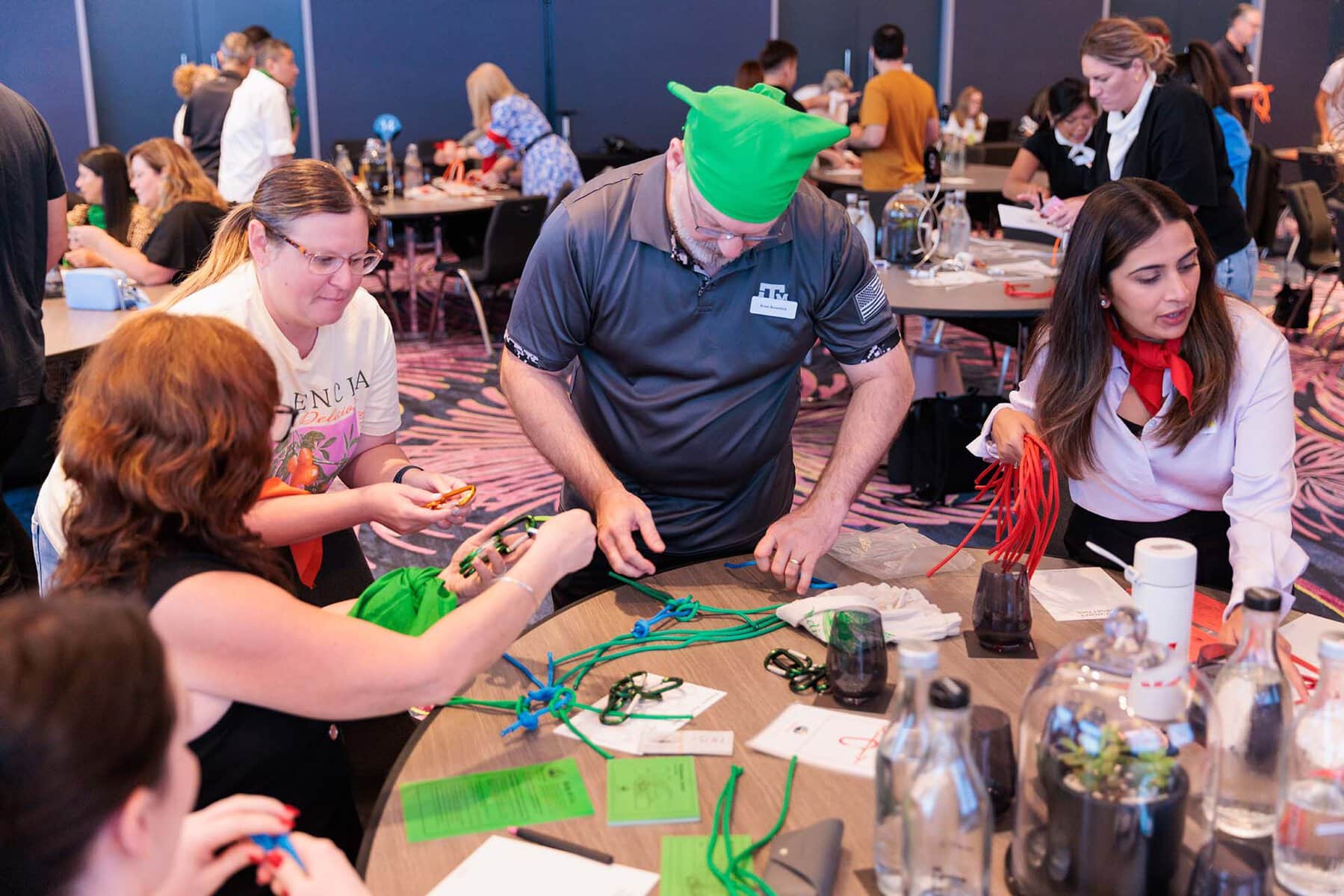
Both men return repeatedly to psychological safety and shared language as the real payoff. Because nobody in the room is an expert camel driver or desert trader, hierarchy briefly dissolves, and people say things they’d never say in a boardroom. Andrew’s story of a CEO on his hands and knees turning down help is a genuinely funny illustration. That shared experience then becomes a shorthand teams can call on back at work: a much easier way to name a dynamic than a head-on confrontation.
On why this matters more now, Andrew’s point lands hardest: leaders are so buried in immediate pressure that almost none of them are deliberately building the relationships they’ll need three years from now. Experiential learning, done well, forces that kind of connection to happen in the room.
This episode is worth your time if you’re tired of training that ticks a box and want to understand what actually makes learning stick.
